Source Conductive Carbon Black Powder for Batteries, Inks, and Plastics
Compare 30 listings of conductive carbon black powder from verified Chinese suppliers. Buyers can evaluate specifications like purity, particle size, and packaging options for battery materials, inks, and plastics applications; compare the available evidence and request quotations based on your requirements.
Key considerations
Products List






Comprehensive Sourcing Guide
Conductive Carbon Black Powder Sourcing Guide
Conductive carbon black powder serves as a critical additive in battery manufacturing, enhancing electrical conductivity within electrode formulations. Buyers must distinguish between generic industrial grades and specialized battery materials, as performance varies significantly. The supplied data indicates a wide range of product models, from GN-KS-6 to TOB-Super-P, suggesting diverse applications within the energy storage sector. Understanding these distinctions is vital for selecting the right material for specific cathode or anode requirements.
Procurement decisions should be guided by observed listing signals, such as the presence of artificial graphite as a negative material and NMC cathode materials. These associations imply that the carbon black is intended for lithium-ion battery production. Buyers should verify if the product is marketed as a standalone additive or part of a broader material ecosystem. The observed price range of $0.6 to $1,500 USD reflects this variability, necessitating careful evaluation of value versus technical specification alignment.
Product Scope and Observed Listing Signals
The market for conductive carbon black powder exhibits significant diversity in packaging and origin, which impacts logistics and handling. Listings show origins in Shandong, Zhejiang, and Hebei provinces, indicating a concentrated manufacturing base in China. Packaging options range from standard packing and vacuum sealing to cardboard boxes and specific bag sizes like 20kg or 500kg. Buyers must assess whether the packaging method aligns with their storage capabilities and moisture sensitivity requirements, especially given the low moisture content claims of less than 0.1%.
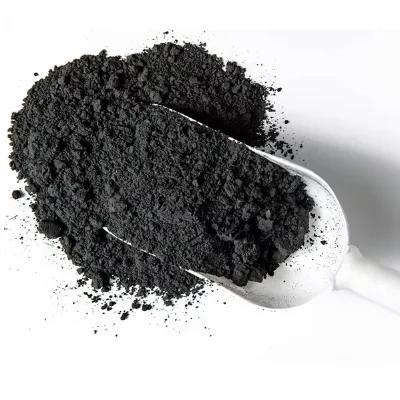
Observed attributes such as "High-Carbon" content and "No Salt Oxide" composition suggest specific chemical profiles tailored for battery research and industrial use. The appearance is consistently described as black powder or granulars, with purity levels starting at 98% minimum. These signals help buyers filter suppliers based on their specific technical needs. It is crucial to confirm if the "Industrial Grade" designation meets the stringent requirements of high-performance battery cells or if it is suitable for less critical applications.
Technical Specifications to Verify
Technical verification begins with confirming the physical and chemical properties that directly influence battery performance. Key attributes to validate include bulk density, which is observed at 2.262g/cm3 for some listings, and particle size distribution, which affects dispersion in slurry. Buyers should request detailed technical data sheets to verify the carbon content and ensure the material meets the specific conductivity requirements of their electrode design. The presence of separators like PP in related listings highlights the interconnected nature of battery components.
Model numbers such as ECP 600JD, GN-Super P Li, and N220/N330/N550 indicate distinct product lines with varying performance characteristics. Buyers must match these models to their specific application needs, whether for battery research or mass production. The CAS number 1333-86-4 and EINECS number 215-609-9 provide essential identification for regulatory compliance and supply chain traceability. Verifying the molecular formula (C) and grade standard ensures consistency across batches and suppliers.
Compliance and Safety Documentation
Compliance documentation is essential for importing and utilizing conductive carbon black powder in regulated industries. Buyers should request certificates of analysis (COA) that confirm the product meets the stated purity and chemical composition. The observed SGS standard and industrial grade certifications provide a baseline for quality assurance. However, buyers must verify if these certifications are current and applicable to the specific batch being purchased, as standards can vary by supplier and region.
Safety data sheets (SDS) are critical for handling and storage procedures, especially given the fine powder nature of the product. The observed shelf life of two years and environmental protection claims suggest manageable storage conditions, but buyers must confirm proper ventilation and dust control measures. The HS code 2803000000 is vital for customs clearance and tariff determination. Ensuring all documentation is accurate prevents delays in supply chain operations and ensures regulatory adherence in the destination country.
Cost Drivers and Commercial Terms
Cost drivers for conductive carbon black powder include raw material quality, packaging complexity, and order volume. The observed MOQ range of 1 to 5,000 units allows for flexibility, but larger orders may offer better pricing. Buyers should negotiate terms based on the total landed cost, including shipping, insurance, and duties. The wide price range of $0.6 to $1,500 USD suggests that premium grades or specialized packaging can significantly impact the final cost.
Commercial terms such as payment methods, lead times, and return policies should be clearly defined in the contract. The observed packing options, from vacuum sealing to case packaging, may affect shipping costs and product integrity. Buyers should assess the supplier's ability to meet delivery schedules, especially for just-in-time manufacturing environments. Understanding the cost structure helps in budgeting and identifying potential savings through volume discounts or optimized logistics.
Supplier Qualification and Quality Control
Supplier qualification involves assessing the manufacturer's production capabilities, quality management systems, and track record. Buyers should verify the supplier's origin and facility details, such as those in Shandong or Zhejiang, to ensure transparency. The availability of customization services indicates a flexible manufacturing process, which can be beneficial for specialized requirements. However, buyers must conduct due diligence to confirm the supplier's ability to maintain consistent quality across large production runs.
Quality control measures should include regular inspections, batch testing, and adherence to agreed-upon specifications. The observed "First Class" quality designation and "No Salt Oxide" attribute suggest a focus on purity, but buyers should request independent test results to validate these claims. Establishing a clear quality agreement with the supplier, including acceptance criteria and rejection procedures, is essential for mitigating risk. Regular audits and performance reviews help maintain high standards and ensure long-term supply reliability.
Long-Term Procurement Checks
Long-term procurement checks focus on supply chain resilience, price stability, and continuous improvement. Buyers should monitor market trends and raw material costs to anticipate price fluctuations. Establishing multiple sourcing options can mitigate the risk of supply disruptions. The observed variety of models and origins suggests a competitive market, but buyers must ensure that switching suppliers does not compromise product quality or performance.
Continuous communication with suppliers is vital for addressing any emerging issues or changes in specifications. Buyers should regularly review supplier performance metrics, including on-time delivery, defect rates, and responsiveness. Implementing a structured review process helps identify areas for improvement and fosters a collaborative relationship. By staying informed and proactive, buyers can secure a reliable supply of conductive carbon black powder that supports their long-term business goals.
FAQs
What is conductive carbon black powder used for in batteries?
Conductive carbon black powder is used as a conductive additive in battery electrodes, where it improves electron transport within cathode and anode materials. In lithium-ion systems using NMC cathodes and artificial graphite anodes, small additions help reduce internal resistance. It also serves in battery research applications for formulating and testing electrode slurries before pilot or production runs.
Which grades of conductive carbon black powder suit battery material applications?
Industrial-grade, high-carbon conductive carbon black powder with purity of 98% min is commonly listed for battery material applications. Grade selection depends on your electrode formulation, since different structures affect conductivity and dispersion. Buyers should confirm the grade standard, appearance such as black powder, and application fit with the supplier before ordering samples for laboratory validation.
Can conductive carbon black powder be customized for specific formulations?
Yes, customization is available from listed suppliers of conductive carbon black powder. Buyers can typically discuss particle characteristics, packaging, and standards according to customer request. Because battery formulations vary, it is practical to share your target application, such as NMC cathode use, and request specification sheets plus samples before committing to bulk volumes.
How is conductive carbon black powder typically packed for shipping?
Packing options shown for conductive carbon black powder include standard packing, vacuum sealing packages, cardboard boxes, and cases, with some products packed at 20kg per bag or 500kg per bag. Vacuum sealing helps limit moisture exposure, which matters since moisture content below 0.1% is a listed property. Confirm the exact packing format and shelf life, often around two years, with your supplier.
What specifications should buyers check before ordering conductive carbon black powder?
Key specifications include purity, such as 98% min, appearance as black powder, moisture content below 0.1%, and bulk density around 2.262 g/cm3 for some grades. Model numbers like GN-KS-6, ECP 600JD, TOB-Super-P, and N220 N330 N550 indicate different product lines. Also verify CAS number 1333-86-4, HS code 2803000000, and the applicable grade standard with each supplier.
How does conductive carbon black powder compare with other conductive additives?
Compared with alternatives like carbon nanotubes or graphene, conductive carbon black powder offers a lower-cost, well-established option that disperses readily in electrode slurries. Products such as Super P style conductive blacks are widely used in battery research and production. The right choice depends on your conductivity targets, loading limits, and budget, so testing small samples in your formulation is recommended.
Which minimum order quantities apply to conductive carbon black powder purchases?
Minimum order quantities vary by supplier and product line, with listed values ranging from single-item purchases for research samples up to 1000 KG for one carbon black product. Some product pages show MOQ ranges up to 5000 units. Buyers should state their required volume, from grams for testing to tonnage for production, when requesting quotations from suppliers.
Can buyers request samples of conductive carbon black powder before bulk orders?
Yes, small-quantity options are available, including models packaged at 100G for battery research purposes. Sampling lets you verify purity, dispersion behavior, and moisture levels in your own electrode process before larger commitments. When requesting samples, ask about the sample size, packing method such as vacuum sealing, and whether the sample specification matches the bulk production material.